
 Atta, Flours & Sooji
 Wheat Atta
 Sooji (Semolina)
 Organic Flours
 Besan (Gram Flour)
 Rice Flour
 Rice & Rice Products
 Rice Cakes
 Poha (Flattened Rice)
 Brown & Red Rice
 Basmati Rice
 Non-Basmati Rice
 Dals & Pulses
 Whole Pulses (Rajma, Chana)
 Masoor Dal
 Chana Dal
 Toor Dal
 Moong Dal
 Edible Oils
 Blended Oils
 Coconut Oil
 Soybean Oil
 Mustard Oil
 Olive Oil
 Sunflower Oil
 Salt, Sugar & Jaggery
 White & Brown Sugar
 Sea Salt & Himalayan Salt
 Table Salt
 Jaggery (Powdered & Block)
 Spices & Seasonings
 Herbs & Seasoning Packets
 Spice Blends (Masalas)
 Whole Spices
 Powdered Spices
 Sauces, Spreads & Condiments
 Honey, Jam & Spreads
 Soy & Chili Sauce
 Chutneys
 Pickles
 Tomato Ketchup
 Mayonnaise & Dressings
 Breakfast Cereals
 Oats & Muesli
 Granola
 Cornflakes
 Canned & Packaged Foods
 Cream Soups / Tomato Soup
 Tea
Tea Tea Bags
 Herbal & Specialty Tea
 Green Tea
 Black Tea
 Coffee
 Instant Coffee
 Ground Coffee
 Coffee Beans
 Health & Energy Drinks
 Health Supplements Drinks
 Energy Drinks
 Protein Shakes
 Fruit Juices & Drinks
 Coconut Water
 Nectars & Juice Drinks
 100% Juices
 Soft Drinks & Sodas
 Cola
Cola Diet Sodas
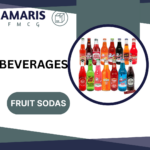 Fruit Sodas
 Lemonade
 Water
Water Sparkling Water
 Packaged Drinking Water
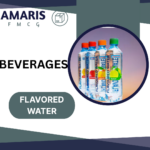 Flavored Water
 Powdered Drinks
 Drinking Chocolates
 Namkeen & Savory Snacks
 Extruded Snacks
 Mixtures & Bhujia
 Chips & Crisps
 Biscuits & Cookies
 Cookies
 Digestive & Marie
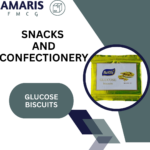 Glucose Biscuits
 Cream Biscuits
 Chocolates & Candies
 Sweets & Bubble Gum
 Toffees & Hard Candies
 Chocolate Bars
 Boxed Chocolates
 Cakes & Pastries
 Pastries & Danish
 Cupcakes
 Birthday & Celebration Cakes
 Desserts & Ice Cream Toppings
 Caramel & Fruit Toppings
 Chocolate Syrup & Sauce
 Whipped Cream
 Sprinkles & Nuts
 Nuts & Dry Fruits
 Raisins & Apricots
 Roasted & Salted Nuts
 Almonds, Cashews, Walnuts
 Milk
Milk Fresh Milk (Full Cream, Toned)
 Flavored Milk
 Butter & Margarine
 Margarine
 Salted & Unsalted Butter
 Cheese
 Sliced Cheese
 Paneer (Cottage Cheese)
 Cream Cheese & Spreads
 Cheese Blocks (Cheddar, Mozzarella)
 Yogurt & Curd
 Set Curd
 Yogurt Drinks (Lassi, Chaas)
 Greek Yogurt
 Flavored Yogurt
 Cream & Desserts
 Custards & Mousses
 Fresh Cream
 Eggs
Eggs Organic Eggs
 Brown Eggs
 Farm Eggs
 Frozen Vegetables
 Peas, Corn, Mix Veg
 Frozen Snacks & Appetizers
 Samosas & Spring Rolls
 Nuggets & Finger Foods
 Frozen Meat & Poultry
 Frozen Sausages & Hot Dogs
 Frozen Pork
 Frozen Chicken
 Frozen Beef
 Frozen Meat Blends & Mince
 Frozen Seafood
 Frozen Fish Fillets
 Frozen Seafood Mixes
 Ice Cream & Frozen Desserts
 Sorbets & Gelato
 Ice Cream Tubs
 Ice Cream Bars & Cones
 Oral Care
 Mouthwash
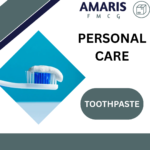 Toothpaste
 Toothbrushes (Manual & Electric)
 Bath & Body
 Deodorants & Antiperspirants
 Body Lotions & Moisturizers
 Soaps & Body Wash
 Hair Care
 Styling Products (Gel, Wax, Spray)
 Hair Oils
 Shampoo & Conditioner
 Skincare
 Lip Balm
 Moisturizers & Creams
 Face Wash & Cleansers
 Feminine Hygiene
 Tampons
 Sanitary Pads
 Shaving Needs
 Razors & Blades
 Shaving Cream & Foam
 Vitamins & Supplements
 Multivitamins
 Protein Powder
 Specialty Supplements (Omega-3, Calcium)
 Ayurveda & Herbal
 Herbal Supplements
 Chyawanprash
 Weight Management
 Fitness & Workout Accessories
 Protein Shakes & Powders
 Sports Nutrition
 Energy Bars & Snacks
 Electrolyte & Hydration Drinks
 Sports Multivitamins
 Protein Powders & Shakes
 Dishwashing
 Dishwashing Bars & Liquid
 Dishwasher Detergents
 Laundry
 Fabric Softeners & Whiteners
 Detergent Powder & Liquid
 Detergent Bars
 Floor & Surface Cleaners
 Glass & Mirror Cleaners
 All-Purpose Cleaners
 Floor Cleaners (Liquid, Powder)
 Toilet Cleaners
 Toilet Cleaning Tablets
 Toilet Brush & Cleaner Sets
 Liquid Toilet Cleaners
 Insecticides & Repellents
 Ant & Cockroach Killers
 Mosquito Repellents (Coils, Mats, Sprays)
 Air Fresheners & Fragrances
 Car Air Fresheners
 Essential Oils & Diffusers
 Plug-In Air Fresheners
 Scented Candles
 Room Sprays
 Paper Products
 Tissues & Napkins
 Kitchen Towels
 Toilet Paper
 Baby Food & Formula
 Cereals & Purees
 Infant Formula
 Diapers & Wipes
 Baby Wipes
 Disposable Diapers
 Baby Bath & Skincare
 Diaper Rash Cream
 Baby Soap & Shampoo
 Baby Lotion & Oil
 Dog Food
 Dry Dog Food
 Dog Treats
 Wet Dog Food
 Pet Grooming
 Shampoos & Conditioners
 Brushes & Combs
 Flea & Tick Control
 Grooming Tools & Kits
 Pet Accessories
 Litter & Trays (for cats)
 Collars & Leashes
 Toys & Chew Toys
 Bowls & Feeders
 Cat Food
 Wet Cat Food
 Cat Treats
 Dry Cat Food
 Organic Products
 Organic Beverages
 Organic Supplements
 Organic Food & Snacks
 Gluten-Free
 Gluten-Free Beverages
 Gluten-Free Snacks
 Gluten-Free Pasta & Grains
 Gluten-Free Breads & Bakery
 Vegan Products
 Vegan Supplements
 Vegan Food & Snacks
 Vegan Beverages
 Sugar-Free & No Added Sugar
 Sugar-Free Beverages
 Sugar-Free Snacks
 Sugar-Free Desserts & Sweets
 Keto-Friendly
 Keto Beverages
 Keto Supplements
 Keto Snacks
 Diabetic-Friendly
 Diabetic-Friendly Supplements
 Diabetic-Friendly Health Monitors & Devices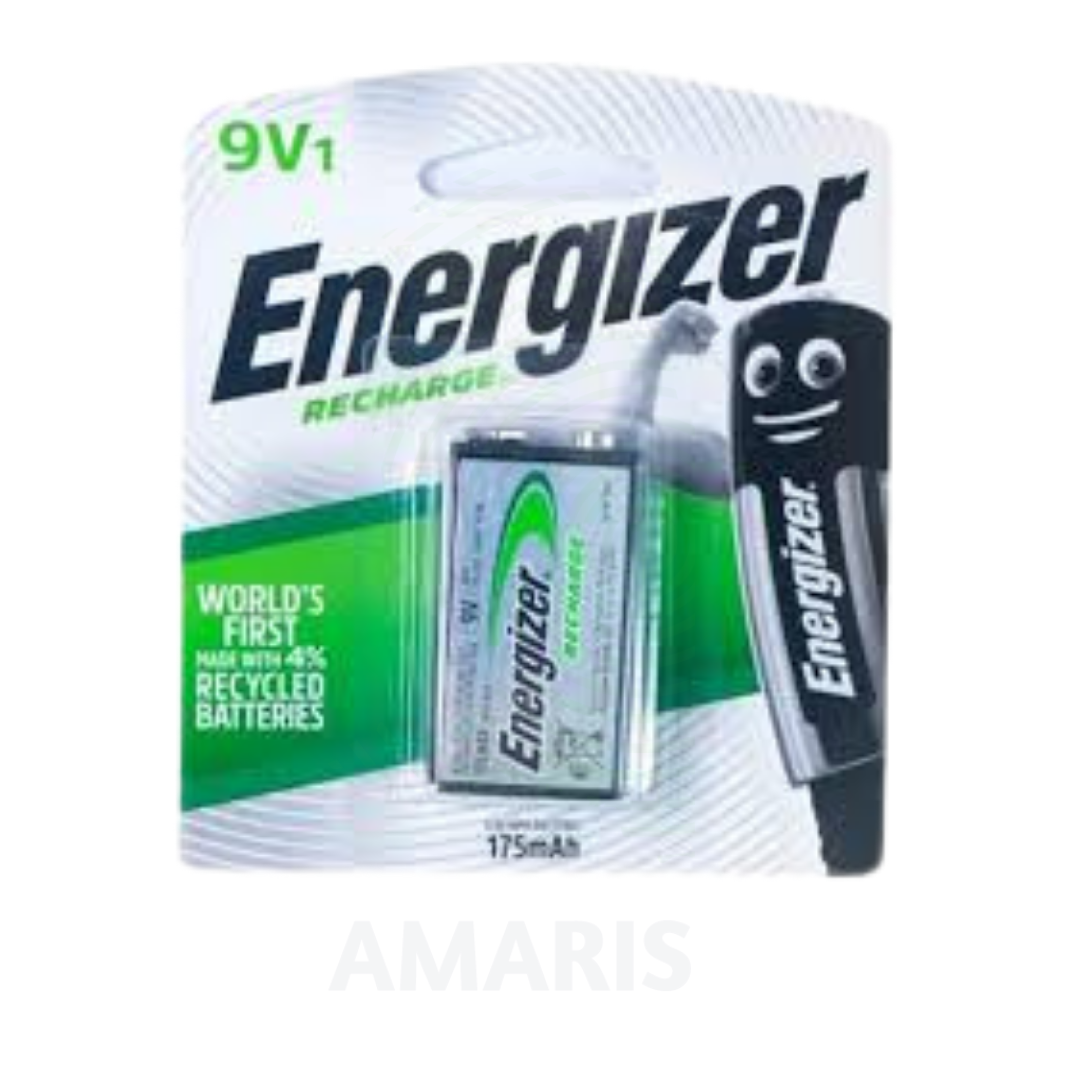
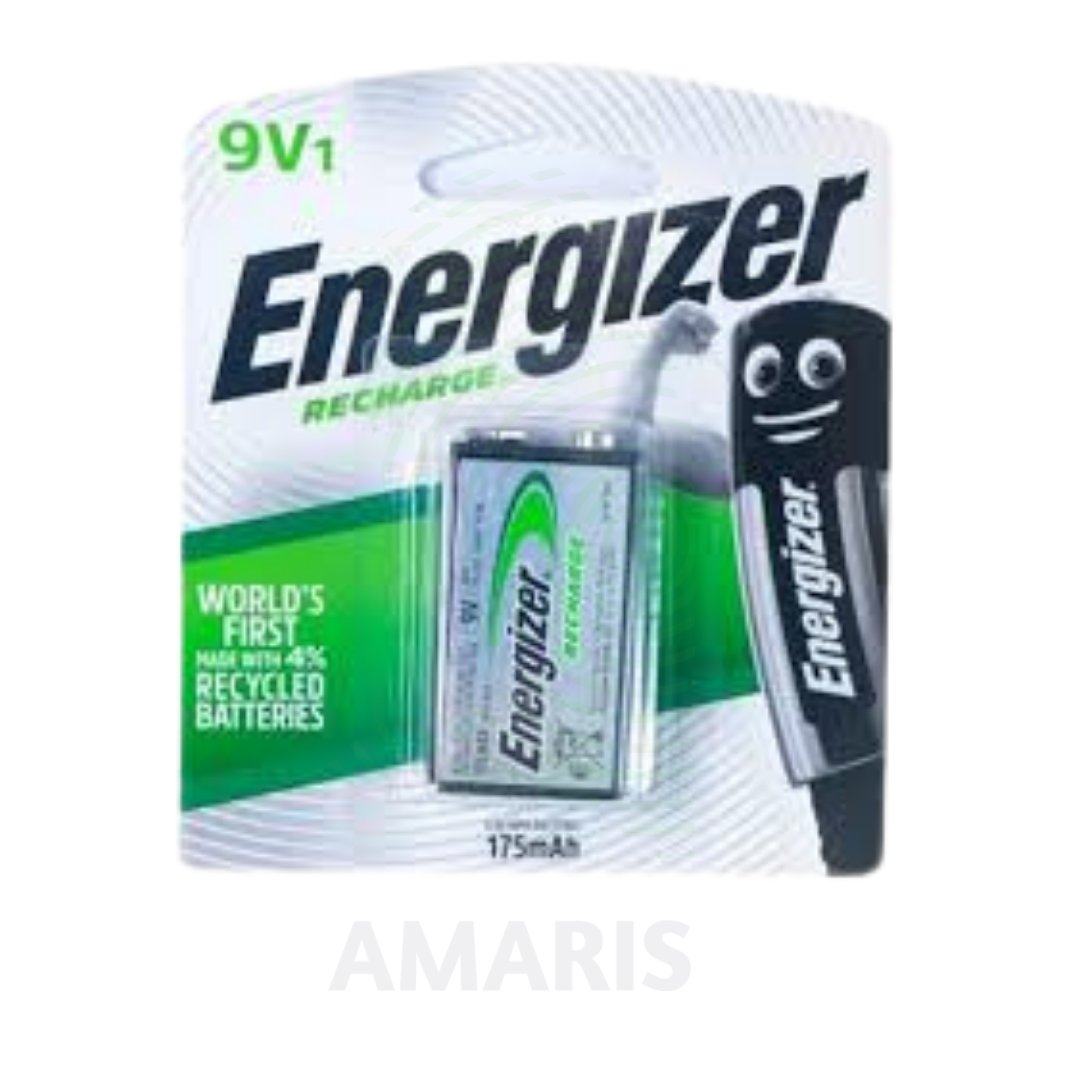
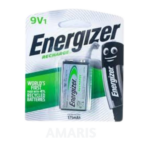

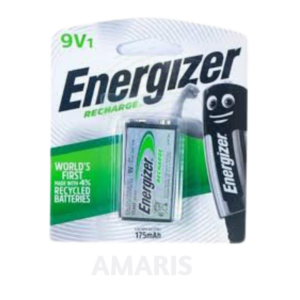
Energizer Recharge 9V Battery
Energizer Recharge 9V Battery is a nickel-metal hydride (NiMH) rechargeable battery designed for moderate-drain medical devices including blood pressure monitors, TENS units, pulse oximeters, and glucose meters . Key specifications: 175mAh capacity; 8.4V nominal output (rated voltage 7.2V); NiMH chemistry; pre-charged and ready to use; holds charge for up to 12 months in storage; up to 300 recharge cycles; 5-year total usable life . Features leak-proof construction that protects sensitive medical equipment from corrosive damage . Compatible with standard 9V chargers, including Energizer CHCC (30mA charge current, 8-hour charge time for full capacity) and CHM39WB (23mA charging output) . For clinicians, this battery is indicated for any 9V-powered medical device with moderate power requirements where frequent use justifies rechargeable technology. WARNING: Keep away from small children. If swallowed, promptly see doctor; have doctor phone (202) 625-3333 collect.
ENERGIZER RECHARGE 9V BATTERY
PRIMARY USES
1. Cost-Effective Power for Moderate-Drain Medical Devices
Primary Use: Provides 8.4V DC rechargeable power for moderate-drain medical devices including blood pressure monitors, digital thermometers, pulse oximeters, glucose meters, and other portable diagnostic equipment where the device is used frequently enough to justify rechargeable technology .
How it helps: For the home healthcare patient and clinical equipment manager, devices used multiple times weekly consume disposable 9V batteries rapidly, creating ongoing costs. The Energizer Recharge 9V delivers 175mAh of NiMH power with a nominal voltage of 8.4V (rated voltage 7.2V), specifically designed for moderate-drain medical applications . The battery comes pre-charged and ready to use immediately . For the patient using a daily blood pressure monitor or glucose meter, this means significant long-term cost savings compared to disposable alkaline 9V batteries.
2. Rechargeable Power for Portable Therapeutic Devices
Primary Use: Powers portable therapeutic devices including TENS units, electronic muscle stimulators, portable massage devices, and other therapeutic equipment where regular use would rapidly deplete disposable batteries and create an ongoing replacement burden .
How it helps: For the physical therapist and chronic pain patient, TENS units and muscle stimulators are often used daily for extended periods, consuming disposable batteries weekly. The Energizer Recharge 9V can be recharged hundreds of times (up to 300 times), with users reporting reliable performance in TENS units over extended periods . With a 5-year total usable life under typical usage patterns, a single battery can replace hundreds of disposable 9V batteries . For the patient managing chronic pain with a TENS unit, this means consistent therapeutic benefit without the ongoing expense and inconvenience of frequent battery purchases.
3. Pre-Charged and Ready-to-Use with Long Charge Retention
Primary Use: Comes pre-charged from the factory and holds charge for up to 12 months in storage, making these batteries suitable for backup medical equipment, emergency kits, and home healthcare devices that may sit idle for extended periods .
How it helps: For the home care coordinator and patient managing multiple health conditions, medical devices stored for occasional use need reliable power when called upon. Traditional rechargeable batteries often self-discharge within weeks. The Energizer Recharge 9V retains usable charge for up to 12 months in storage, ready for immediate use straight from storage . Users report this battery holding voltage in smoke detectors for over a year without recharging . For the patient with an emergency medical alert system or backup monitoring equipment, this means confidence that devices will function when needed.
4. Leak-Proof Construction for Sensitive Medical Equipment Protection
Primary Use: NiMH chemistry with leak-proof construction eliminates the risk of corrosive alkaline leakage that can damage sensitive medical equipment, making these batteries suitable for expensive diagnostic devices, therapeutic equipment, and irreplaceable medical instruments .
How it helps: For the biomedical engineer and home healthcare patient, alkaline battery leakage is a common cause of irreparable damage to sensitive medical devices. Unlike alkaline batteries which can corrode and leak, Energizer Recharge NiMH batteries are constructed to resist leakage . Users specifically cite this as a key advantage, noting “NiMH batteries won’t leak and ruin your device, like alkalines can” . For the patient with an expensive TENS unit, blood pressure monitor, or other sensitive medical equipment, this provides peace of mind that the battery will not cause costly damage.
5. Environmentally Sustainable Alternative for Healthcare and Home Use
Primary Use: Replaces hundreds of disposable alkaline batteries over its lifetime, significantly reducing battery waste while providing equivalent or better performance for moderate-drain medical devices .
How it helps: For the environmentally conscious patient and healthcare facility sustainability coordinator, single-use battery waste is a significant environmental concern. The Energizer Recharge 9V can be recharged hundreds of times, with up to 300 recharge cycles per battery . Over its 5-year usable life, a single rechargeable battery replaces hundreds of disposable alkaline batteries . For the healthcare facility and home user, this means measurable waste reduction without compromising medical device performance.
SECONDARY USES
1. Powering portable audio devices for clinical and therapeutic applications: For music therapy sessions, hearing assessment tools, and portable audio equipment used in clinical settings, the 9V rechargeable battery provides reliable power for devices such as portable stereos, guitar pickups, and external preamps .
2. Operation of smoke detectors and carbon monoxide alarms in healthcare facilities and home care: For residential care facilities, group homes, and home healthcare settings, these batteries power essential life-safety devices, with users reporting 12+ months of operation on a single charge .
3. Powering electronic toys used in paediatric therapy: For paediatric occupational therapy and child life programmes, these batteries power interactive toys and educational devices where frequent use makes rechargeable batteries the most practical and cost-effective power solution .
4. Operation of wireless microphones and communication equipment: For telehealth applications, medical training, and clinical presentations, these batteries power wireless microphones where rechargeable operation eliminates the risk of mid-session battery failure with fresh alkalines.
5. Home healthcare emergency preparedness kits: For patients managing chronic conditions at home, maintaining a charged 9V rechargeable battery ensures that backup monitoring equipment and emergency devices are always ready for use without searching for disposable batteries.
1. BASIC IDENTIFICATION ATTRIBUTES
-
Device Type: Rechargeable, multiple-use, 9V secondary battery (NiMH), not for primary use in devices requiring high continuous current
-
Designation: Energizer Recharge 9V, Energizer Recharge Universal 9V, Energizer Recharge Power Plus 9V, NH22NBP, NH22NBP, Rechargeable 9V
-
Chemistry: Nickel-Metal Hydride (NiMH)
-
Nominal Voltage: 8.4 volts (rated voltage 7.2 volts)
-
Capacity: 175 mAh
-
Key Components: Nickel hydroxide (positive electrode), metal hydride alloy (negative electrode), alkaline electrolyte, steel casing, plastic insulating gasket
-
Unique Feature: Pre-charged and ready to use; holds charge up to 12 months in storage; up to 300 recharge cycles; 5-year total usable life; leak-proof construction; RoHS compliant
2. TECHNICAL & PERFORMANCE PROPERTIES
-
Nominal Voltage: 8.4 volts DC
-
Rated Voltage: 7.2 volts
-
Capacity: 175 mAh
-
Internal Resistance: 1000 mOhms (charging), 1500 mOhms (discharging)
-
Terminal Type: Standard 9V snap connector (circular positive, hexagonal negative)
-
Pre-Charged: Yes, ready to use immediately upon purchase
-
Recharge Cycles: Up to 300 times
-
Total Usable Life: Up to 5 years under typical usage patterns
-
Charge Retention: Up to 12 months in storage
-
Operating Temperature (Max): 122°F / 50°C
-
Operating Temperature (Min): 32°F / 0°C
-
Physical Dimensions: Height 1.83-1.87 inches (46.5-47.5 mm), Width 1.0 inch (25.5 mm), Depth 0.65 inches (16.5 mm)
-
Weight: 42 grams (1.5 oz.)
-
Packaging: Available as single pack, 2-pack, and 4-pack depending on region and variant
-
Standards: ANSI certified
-
Certifications: ENERGY STAR certified , RoHS compliant
3. COMPATIBLE CHARGERS
-
CHCC Compact Charger (Asia Pacific): 9V charge current 30mA; estimated charge time 8 hours
-
BC-5HU Universal Charger: 9V charge current 12-16mA; charge time 12-18 hours depending on loading
-
CHM39WB Hi-Energy Charger: 9V charging output 23mA
-
Universal 9V chargers: Chargers capable of accepting 9V NiMH batteries with appropriate charge current
-
Charger Note: For best results, pair with Energier recommended chargers designed for 9V NiMH batteries. Do not attempt to charge non-rechargeable (alkaline/carbon zinc) batteries
4. PHYSICAL & OPERATIONAL PROPERTIES
-
Preparation: Remove from packaging. No charging required before first use—batteries come pre-charged .
-
Usage Instructions: Insert battery matching polarity (+ and -) as indicated in device using standard 9V snap connector. For best results, replace all batteries in a device at the same time. Do not mix with non-rechargeable batteries or batteries of different capacities or charge states. Recharge using a compatible NiMH 9V battery charger when power is depleted. For long-term storage (over 12 months), store in a cool, dry place with partial charge.
-
Storage Conditions: Store in a cool, dry, well-ventilated area. Elevated temperatures shorten battery life and increase self-discharge. Will hold charge for up to 12 months in storage . Do not freeze. For extended storage, maintain partial charge.
-
Portion Size: One 9V battery per device (most devices use a single 9V cell).
5. SAFETY & COMPLIANCE ATTRIBUTES
-
Allergens: None. No latex. No known allergens in battery construction.
-
Ingestion Hazard: Immediate medical emergency. Swallowing a 9V battery can cause serious chemical burns of mouth, esophagus, and gastrointestinal tract. The 9V potential across closely spaced terminals can cause severe burns within hours .
-
Battery Ingestion Hotline: Call 202-625-3333 collect day or night for battery ingestion.
-
Choking Hazard: 9V batteries can lodge in the esophagus of infants and small children if swallowed. Keep out of reach of children .
-
Chemical Spill (Leakage): Contents of an open battery can cause skin, eye, and respiratory irritation. Electrolyte (potassium hydroxide) is corrosive. Unlike alkaline batteries, NiMH batteries are leak-proof and will not ruin devices .
-
Short Circuit: Do not short circuit terminals. The closely spaced snap terminals make 9V batteries particularly vulnerable to shorting from metal objects (coins, keys, jewellery). Prolonged short circuit can cause battery to lose energy and generate significant heat.
-
Recharging: Use only with compatible NiMH battery chargers designed for 9V cells. Do not exceed recommended charge current. Overcharging can reduce battery life or cause leakage .
-
Disposal: Do not incinerate. Rechargeable batteries contain recyclable materials. Dispose of in accordance with local regulations for rechargeable battery recycling. Do not place in household waste where battery recycling programmes exist .
-
Applications: Blood pressure monitors, TENS units, pulse oximeters, glucose meters, portable stereos, wireless microphones, smoke detectors, guitar pickups/preamps, electronic toys, and other moderate-drain 9V devices .
-
Quality Assurance: Manufactured under ANSI and IEC battery standards. ENERGY STAR certified .
6. STORAGE & HANDLING ATTRIBUTES
-
Storage: Store in cool, dry, well-ventilated area away from direct sunlight, heat sources, and humidity. Will hold charge for up to 12 months in storage . For extended storage (over 6 months), maintain partial charge (approximately 40-50%) and store at room temperature (15-25°C) to maximise battery life.
-
Charge Retention: Batteries retain approximately 70-80% of charge after 12 months in storage under normal conditions .
-
Inspection: Do not use batteries that are leaking, corroded, swollen, or have damaged casings. Do not use batteries with damaged packaging.
-
Handling: Do not install backwards (reverse polarity). Do not short circuit terminals (snap terminals are particularly vulnerable). Do not crush, puncture, or disassemble. Do not expose to fire or temperatures above manufacturer limits. Do not mix with disposable (alkaline/carbon zinc) batteries in the same device.
1. SAFETY PRECAUTIONS
-
Battery ingestion: 9V batteries are a serious ingestion hazard for infants and young children due to their size and the 9V potential across closely spaced terminals. If a battery is swallowed, seek immediate medical attention. Call the National Battery Ingestion Hotline at 202-625-3333 collect day or night for advice and follow-up. Do not induce vomiting. Do not give food or drink. Do not delay—severe oesophageal burns can occur within 2 hours.
-
Keep out of reach of children: Store batteries in original packaging or in a secure container that children cannot open. Keep new, used, and charging batteries out of reach of children at all times .
-
Do not ingest: Battery contains nickel hydroxide and potassium hydroxide which are corrosive and toxic if ingested.
-
Do not install backwards: Reversing polarity can cause leakage, rupture, or fire. Inadvertent charging can occur if battery is installed backwards.
-
Use appropriate charger: Only charge with NiMH battery chargers designed for 9V cells. Do not attempt to charge in chargers designed for NiCd or lithium batteries unless multi-chemistry compatible. Do not use damaged chargers .
-
Do not short circuit: Short circuit can cause the battery to lose energy and generate significant heat. The snap terminals on 9V batteries are particularly vulnerable to shorting from metal objects such as jewellery, tools, or coins. Do not carry loose batteries in pockets or bags with metal objects.
-
Do not disassemble, crush, puncture, or incinerate: The battery should not be opened or burned. Exposure to ingredients contained within or their combustion products could be harmful. The battery may leak or rupture if disposed of in fire.
-
Do not expose to extreme heat: Do not place in fire, oven, microwave, or direct sunlight.
-
Do not mix battery types: Do not mix old and new batteries, different charge states, or different chemistries in the same device.
-
Replace all batteries at the same time: When recharging, recharge all batteries together. Do not mix with partially charged batteries.
-
Leakage precautions: If a battery leaks, avoid contact with skin, eyes, and clothing. Potassium hydroxide can cause burns. Ventilate area. Dispose of leaking batteries properly.
2. FIRST AID MEASURES
-
Ingestion: Do not induce vomiting. Do not give food or drink. Seek immediate medical attention. Call the National Battery Ingestion Hotline at 202-625-3333 collect day or night for advice and follow-up. Do not delay—severe injuries can occur within 2 hours.
-
Eye contact (battery leakage): Contents of an open battery can cause severe irritation and chemical burns. If battery ruptures and contents contact eyes, rinse immediately with plenty of lukewarm water for a minimum of 15 minutes, lifting upper and lower lids. Get immediate medical attention .
-
Skin contact (battery leakage): Contents of an open battery can cause skin irritation and chemical burns. Remove contaminated clothing. Wash skin with soap and water for at least 15 minutes. If irritation persists or burns are present, seek medical attention .
-
Inhalation (battery leakage): Contents of an open battery can cause respiratory irritation. Move to fresh air. If symptoms persist, seek medical attention .
3. FIRE FIGHTING MEASURES
-
Flammability: NiMH batteries are combustible. Will burn if exposed to open flame.
-
Extinguishing Media: Use water spray, foam, dry chemical powder, or carbon dioxide (CO₂). It is permissible to use any class of extinguishing medium.
-
Fire Response: Cool exterior of batteries if exposed to fire to prevent rupture. For small fires, use appropriate extinguisher. For large fires, evacuate area. Do not throw batteries into fire as they may leak or rupture. Firefighters should wear self-contained breathing apparatus (SCBA) and full protective gear.
Related products
Energizer A23 Battery
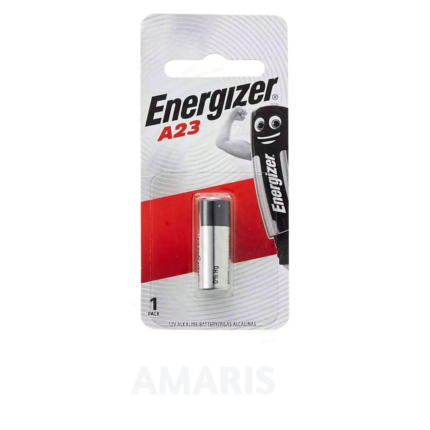
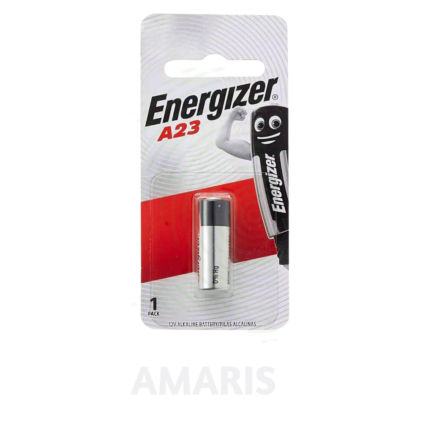
Energizer A23 Battery is a miniature 12V alkaline battery designed for specialty medical and security devices requiring high voltage in a compact form factor. Key specifications: 12V nominal output; 50 mAh capacity; 10.3mm diameter; 28.5mm height; 8g weight; and 5-year shelf life at 21°C . Features zero added mercury construction with leakage-resistant sealing technology . Replacement compatibility includes 1181A, A23BP, DL21, DL23, MN-21B, MN21, and V23GA . For clinicians, this battery powers medical alert pendants (PERS), glucose monitors, and wireless medical equipment remote controls. Ingestion requires immediate medical attention (800-498-8666).
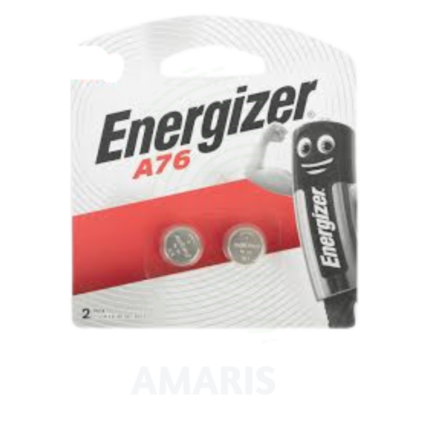
Energizer A76 Battery
Energizer A76 Battery is a miniature 1.5V alkaline button cell battery designed for compact medical devices including glucose monitors, heart rate monitors, digital thermometers, and pedometers. Key specifications: 1.5V nominal output; 150-175 mAh capacity; 11.6mm diameter; 5.4mm height; 2.4g weight; and 5-year shelf life at 21°C . Features zero added mercury construction with leak-proof protection for device safety . Replacement compatibility includes 157, 303, 357, AG13, EPX76, LR44, S76, SG13, and SR44 . For clinicians, this battery powers essential home healthcare monitoring devices. WARNING: Keep away from children. If swallowed, button batteries can cause severe or fatal injuries within 2 hours. Seek immediate medical attention if ingestion is suspected (800-498-8666) .
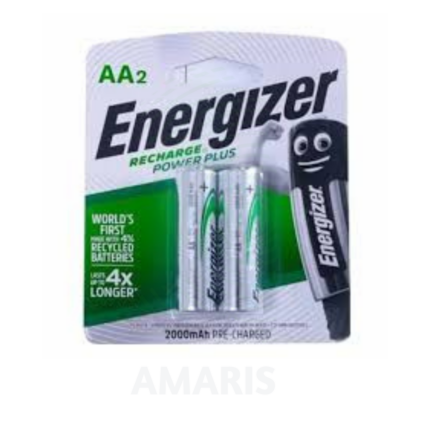
Energizer AA Charger +2 Battery
Energizer AA Charger +2 Battery is a value-priced battery charger kit designed for NiMH AA rechargeable batteries, ideal for home healthcare and clinical settings using daily blood pressure monitors, pulse oximeters, and portable diagnostic equipment. The kit includes 2 Energizer Recharge Universal AA batteries (2000 mAh capacity, pre-charged and ready to use) and a basic charger capable of charging 2 or 4 AA or AAA NiMH batteries simultaneously. Key specifications: 200mA charging output for AA; 24-hour charge cycle; LED operational indicator; 100-240V AC universal input; Dimensions: 118 x 75 x 67 mm; Weight: 225g. The included batteries feature leak-protection design to safeguard sensitive medical devices from damaging leaks under normal use conditions. For clinicians, this charger is indicated for NiMH batteries only—do not use with alkaline, carbon zinc, lithium, or NiCd batteries. WARNING: For indoor use only. Not intended for use by young children without supervision. Plug directly into wall outlet—never use extension cords.
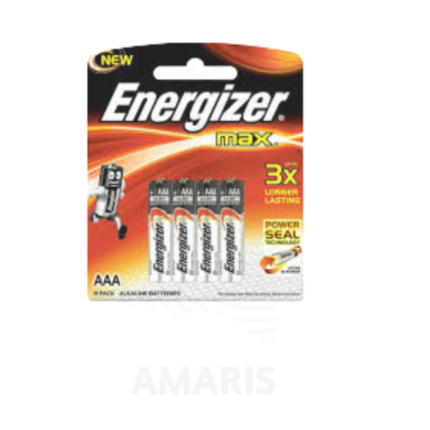
Energizer AAA Battery
Energizer AAA Battery are available in two primary chemistries for medical applications. Alkaline AAA (model X92, E92, EN92) provides a nominal 1.5V output, 11.5g weight, 150-300 milliohm internal resistance, and 7-year shelf life, with zero added mercury. Ultimate Lithium AAA (model L92) provides 1.5V output, 7.6g weight, operates from -40°C to 60°C, offers 2.0A continuous discharge, 3.0A pulse discharge, and 25-year shelf life. Both are manufactured under ANSI and IEC standards (ANSI-15A, IEC-LR03 for alkaline; ANSI-15-LF, IEC-FR03 for lithium). For clinicians, AAA batteries power compact medical devices including glucometers, CGM receivers, thermometers, and pulse oximeters. Ultimate Lithium is indicated for high-drain, extreme-temperature, or long-storage applications. Contains zero added mercury or cadmium. Ingestion requires immediate medical attention (800-498-8666).
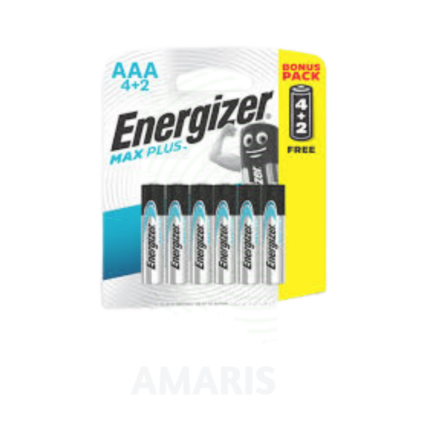
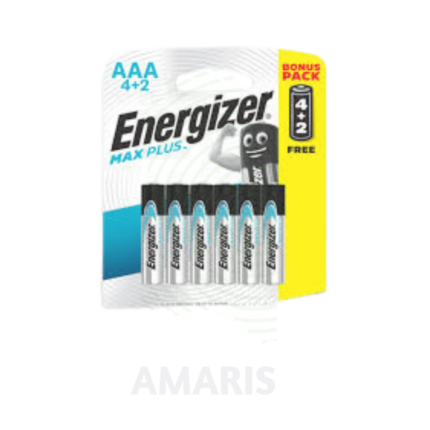
Energizer Max Plus AA Battery
Energizer Max Plus AA Battery are high-performance alkaline batteries designed for high-tech medical diagnostic devices, home healthcare equipment, and emergency medical kits. Key specifications include: IEC-LR6 designation; 1.5V nominal voltage; 1500 mAh (1.5Ah) capacity; -18°C to 55°C operating range; and 12-year shelf life at 21°C (up to 15 years in select regions) . Features enhanced leak-resistant construction covered by the Energizer No Leak Guarantee to protect sensitive medical equipment from corrosive damage . Manufactured with 4% recycled battery material (EcoAdvanced technology) and zero added mercury or cadmium, making them suitable for environmentally conscious healthcare facilities . For clinicians, these batteries are indicated for medical technology applications, portable diagnostic devices, and emergency preparedness . Ingestion requires immediate medical attention (800-498-8666).
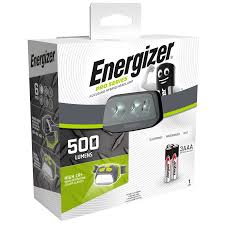
ENERGIZER PRO SERIES FOCUSING HYBRID HEADLAMP (500 LUMEN)
Energizer Pro Series Focusing Hybrid Headlamp delivers (500 lumens) of hands-free LED light with Digital Focus Technology for seamless beam adjustment from flood to spot. Features 6 light modes including green for night vision, high CRI 90 for accurate colour rendering, pivoting head, IP67 waterproof/dust-tight rating, shatterproof lens, and 2-metre impact resistance. Hybrid power system operates on rechargeable battery or 3 AAA batteries. Suitable for clinical examinations, wound assessment, disaster response, night rounds, and low-resource settings. Warning: Keep batteries away from children. If swallowed, seek immediate medical attention (202-625-3333).
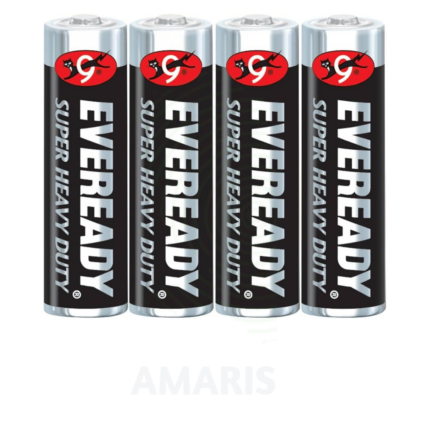
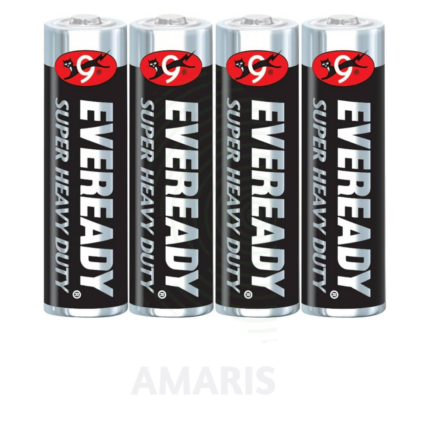
Eveready AA Black Battery
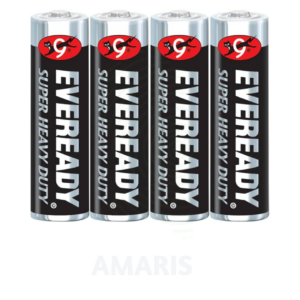
Eveready AA Black Battery is a carbon zinc (zinc chloride) primary battery designed for low-drain medical devices including blood pressure monitors, basic diagnostic equipment, and portable radios . Key specifications: 1.5V nominal voltage; AA size; IEC R6 designation; carbon zinc chemistry; leak-resistant construction with Quality Seal guarantee; zero added mercury and cadmium; average weight 15g; and 3-4 year shelf life . Operating temperature range: -18°C to 55°C (0°F to 130°F) . For clinicians, this battery is indicated for low-drain medical equipment where cost-effective power is prioritised over high-drain performance, suitable for intermittent-use devices and backup equipment in clinic and home healthcare settings. WARNING: Keep away from small children. If swallowed, promptly see doctor; have doctor phone (202) 625-3333 collect .